


When you visit larger online stores such as Zalando, Nike or Blivakker.no, browse a bit and click on various products, you've probably noticed that these websites often recommend other products to you as well? These recommendations usually also follow you through the various steps you take on the website. But what really lies behind the product recommendations, how do they work -and how do you set them up in the best possible way to ensure effective conversions?
Ahead of setting live product recommendations on your eCommerce, we recommend making a plan and to evaluate a few questions: How should you choose which products are recommended to the visitors at all times? Where should they be placed, on what pages, and what type of recommendations and logic should be used for the various placements?
By "logic" we mean what strategy lies behind the products which are displayed in the listing of products. For example, do you want the selection of products displayed to be based on personalized browsing history, or would you rather show the online store's best sellers?
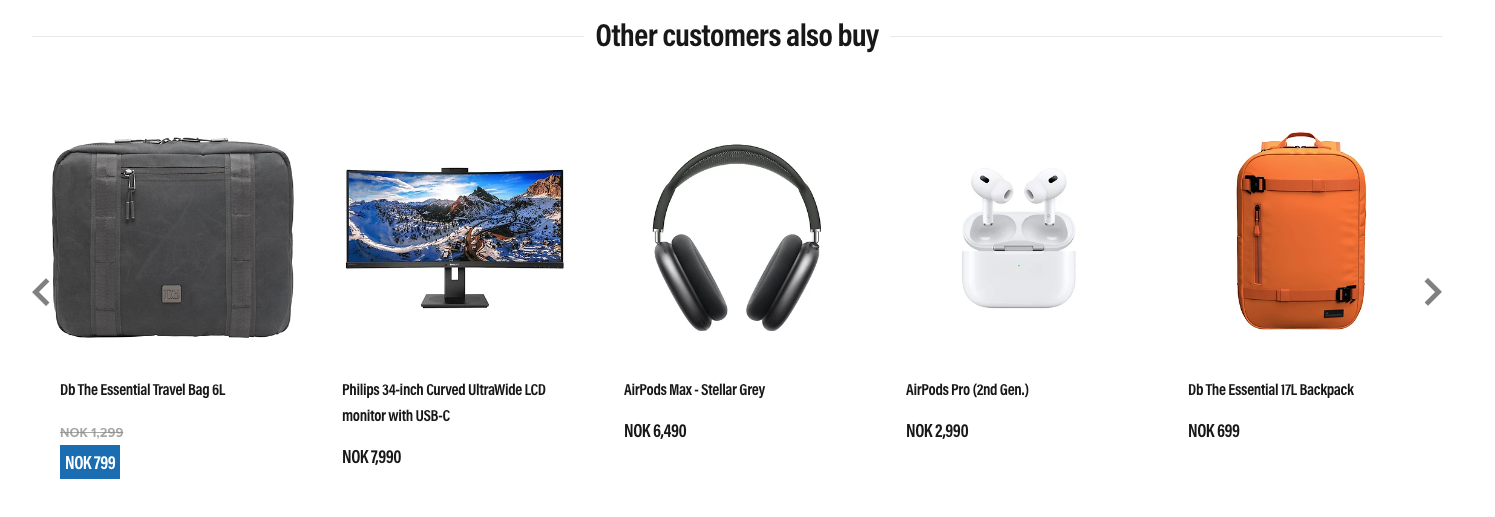
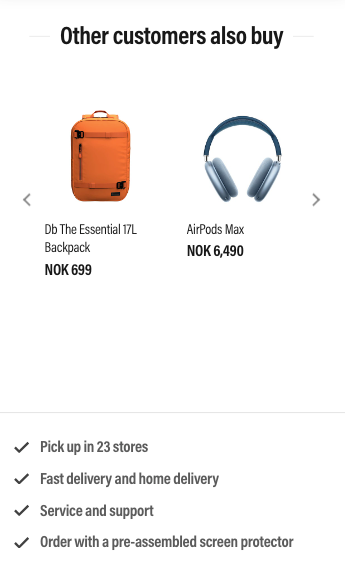
Why use product recommendations?
Most ecommerce players use product recommendations to achieve various goals for their eCommerce store. Product recommendations contribute to an increased likelihood of conversion, as well as upselling and an additional number of sales. It is also an effective way to highlight a large and exciting product range, and a good way to highlight strategically important products, categories or brands (for example products with high margins, or products which are strategically important for building a brand) .
Third-party tools such as Nosto, Clerk, Adobe Sensei, Apptus, Dynamic Yield and Rich Relevance are all good AI tools to use for automatic recommendations. If you have a large product range, it is recommended to have a third-party AI-tool in place, both because it saves time and because it makes it possible to effectively use more smart logic than with a manual setup.
It will often be appropriate to place product recommendations on the front page, category pages, product pages, in the cart and on content pages. Please read on below to see our advice on what type of product recommendation strategy and logic that could fit the various pages best.
Product recommendations on the front page
Use product recommendations to ensure engagement and relevant content on the front page, and on other top pages that receive large shares of traffic. The front page of an online store often receives a large proportion of the total traffic, both paid and organic, it is important that this particular page is laid out as strategically and well thought through as possible. Once you manage to draw visitors to the front page, it is important to engage them to explore the site universe further. Engaging, offering relevant and personalized content are good steps towards ensuring effective conversions.
- Returning visitors: A good way to personalize is to use personalized product recommendations based on products the visitor has previously viewed.
- New visitors: Visitors who have not visited the site before should see a selection of the most popular (most visited or best selling) products in the product recommendation banners.
These logics have been tried and A/B tested for many sites and seem to work well for many. But this can of course depend on the individual online store, and vary from industry to industry, so feel free to A/B test periodically to be sure that this logic work also for you.
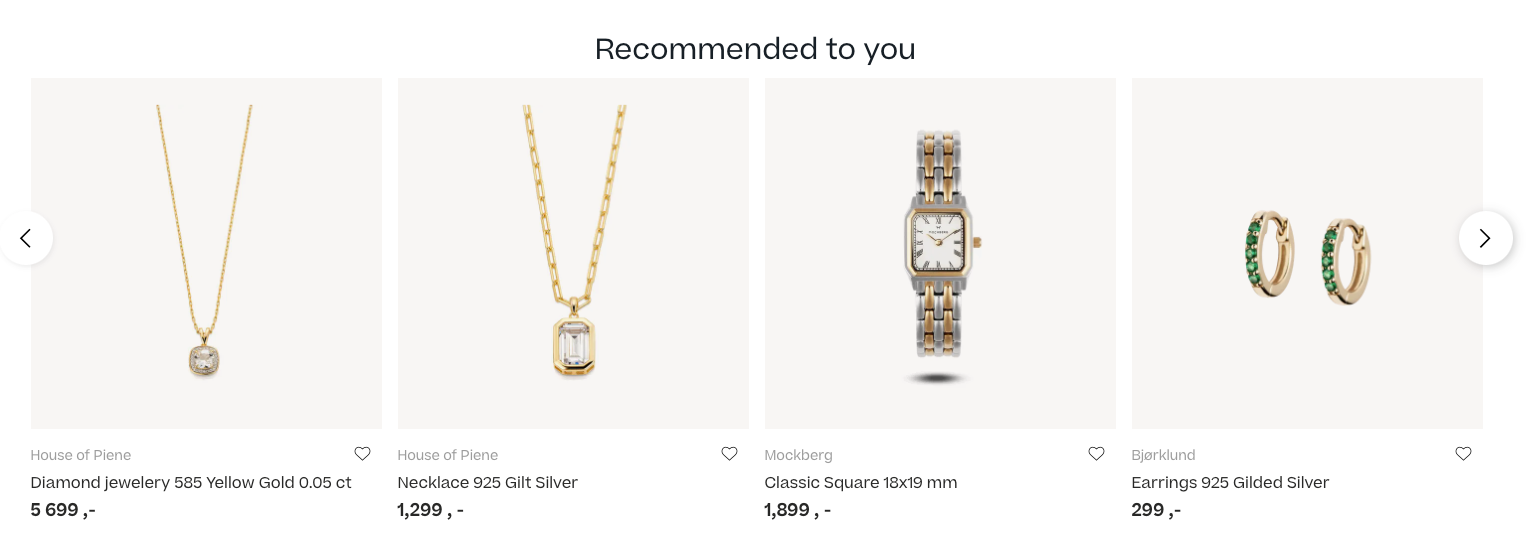
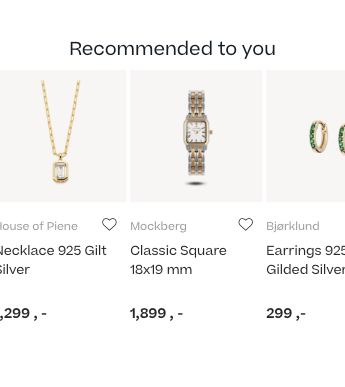
Product recommendations on category pages
Product recommendations on category pages should be placed at the very top of the category page, to ensure that the most relevant products appear first.
- Returning visitors: Products visitors have looked at previously can be fine to use again, but make sure that products that are being showcased are products within the current category.
- New visitors: If you have not visited the site before, you can set up a so-called "fallback" logic that shows the most popular (most viewed) or best-selling products within the category.
Or perhaps you would rather focus on products with high margins that you also know convert well? This of course depends on what the goal and strategy is for your online store.
Product recommendations on product pages
When a visitor has found and clicked on a product they like and is on the product page, it can be assumed that interest in the product and product type is present. Here you should do what you can to keep the interest of the visitor, by showing products and an assortment that is as relevant as possible in relation to the main product. Which recommendations are best here will naturally depend on the type of product and target group, but some good logics to use are suggested below.
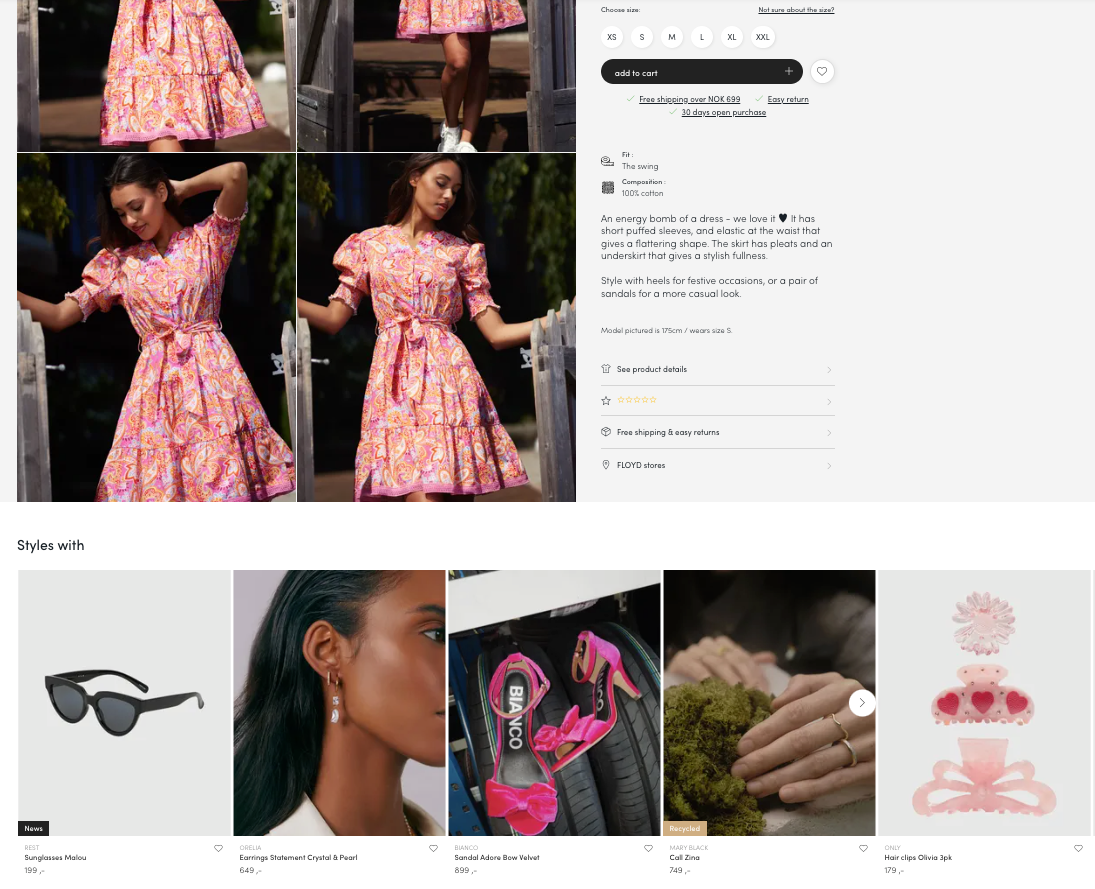
- Products that are similar to the main product one is already browsing, to facilitate an actual purchase of a product in the category more easily. Let's say you visit the product page of a summer dress in an online store, and you realize that the size you need is out of stock... But, the online store may have other dresses that looks quite similar, but in the right size. Maybe you'll even find an even nicer dress than the one you were looking at in the first place?
- Products that are similar to the main product you are already looking at, but which are more expensive than the main product, to stimulate upselling. Here we could choose to show similar dresses that are slightly more expensive.
- Other customers who have viewed or purchased the main product may also have purchased other products along with it. The idea is that visitors have roughly the same needs or wishes. This assumes that you have enough data, in other words that there are enough people who have looked at or bought the product. For example "Others who bought this summer dress also bought this skirt".
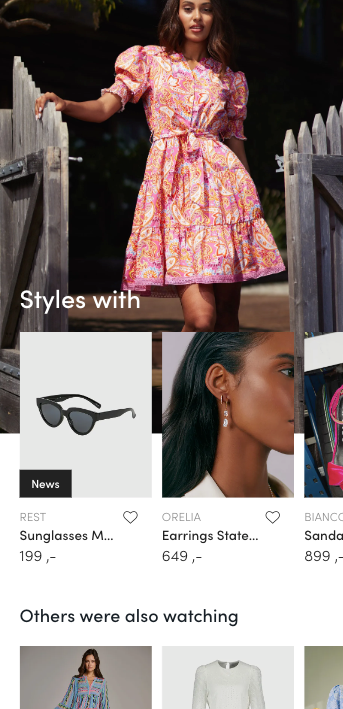
- Products from other product categories that are a natural supplement or accessory to the main product. A classic example here is "can be styled with"/ "complete the look". Let's take the example of the summer dress, a pair of wedge shoes or a bag would have fit in nicely here as an example of good product recommendations. This logic engages and helps the customer to see the potential in the product. This logic can also work well in the shopping cart to achieve additional sales.
Product recommendations in the cart
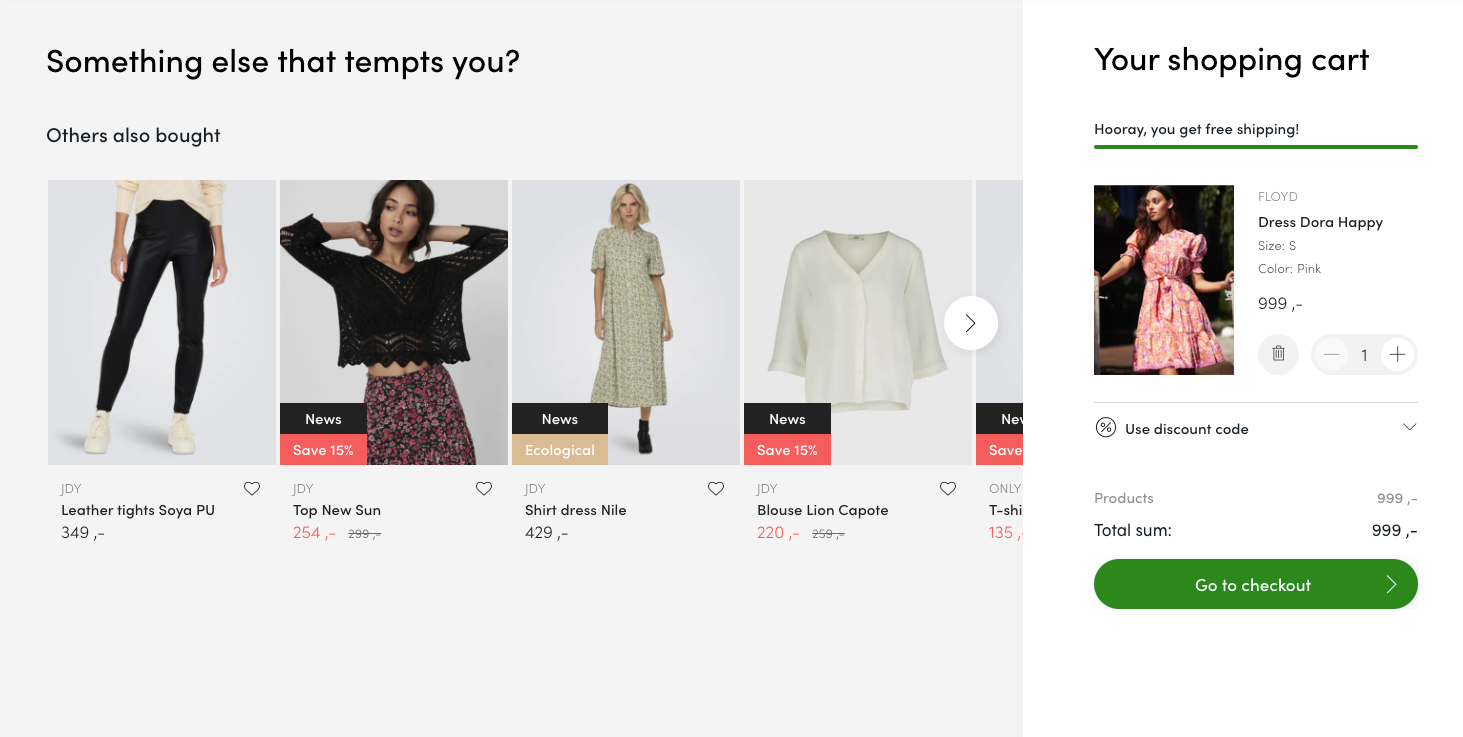
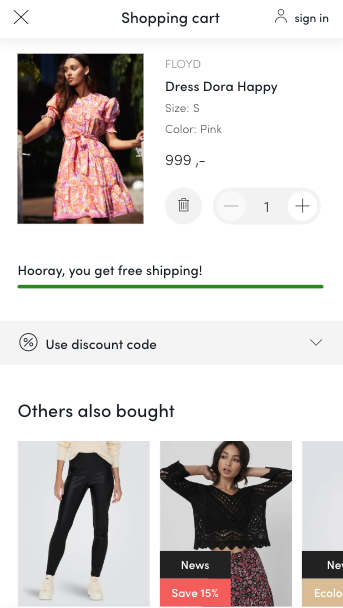
In the shopping cart, the goal is often additional sales, and a desire for increased average order value (AOV). In the cart, there are not many steps left to purchase the main product, and the product recommendations should inspire to shop more.
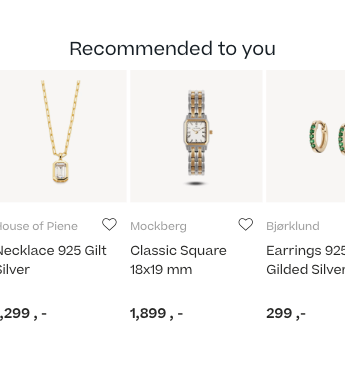
- These can be related products and/or matching products. What can the main product be used with? For example, if a customer has chosen to add a necklace to the shopping cart, do you have any matching earrings that can be used as a set?
- Accessory products to the main product. For example shoe polish if you have bought a pair of shoes or polish for jewelery if you have bought expensive jewelery that requires care etc.
- Take into account the price level. Especially in the cart, it may be wise to take into account the price level of product recommendations. If the visitor has put a very expensive product in the shopping cart, it can often be difficult to get them to add another similarly expensive product to the shopping cart. Here, it may be a good idea to use a filtering mechanism in the tool you use to set a lower price for the product recommendations, for example that they cost a maximum of one third of the price of the main product. The barrier to adding an extra product is then smaller, there is an increased probability of additional sales and an increased shopping basket size. Note that this will of course depend on the price level you have in your online store, and the tactic is probably not suitable for everyone, but may be good for some.
Product recommendations on content pages
Product recommendations can be used creatively on content pages, and can help boost conversion rates. If you have good article pages that will help and guide visitors to purchase, this is an excellent opportunity to display relevant products. Here, the visitor is already interested in the topic or what is discussed.
- Personalized recommendations based on e.g. search history or products the customer has previously looked at, which also fall within the topic, product category or product type that is written about in the article.
- Bestsellers in the category. Imagine you have set up a content page that will guide and help the user with what engagement ring he/she should buy. Here it would be an excellent choice to display engagement rings that the visitor has looked at previously, or the rings that have converted best in terms of sales in general.
Final tips
Adapt the product recommendations so that they support the strategy and goals of your online store. Perhaps it is more important to highlight selected brands or product categories to your customers compared to other targets. Or perhaps you have products with very good margins that should be prioritized over other products?
Test, test, test! For example, you can also choose to filter on only showing products or colors (at category level), on margin, on price level, on brand, or only show products in the recommendation listing that have customer reviews/star ratings showcasing etc. The possibilities are many! No online stores, products, industries and customer groups are the same, and although many things work for many, there may be completely different logics that work best for you. The recommendations above can be good to start off with, but it is important to test what actually works best for you.
For more tips and advice, and if you want help to make a concrete plan for this, feel free to get in touch and we will discuss, test and find out what might be best for your online store!